 By
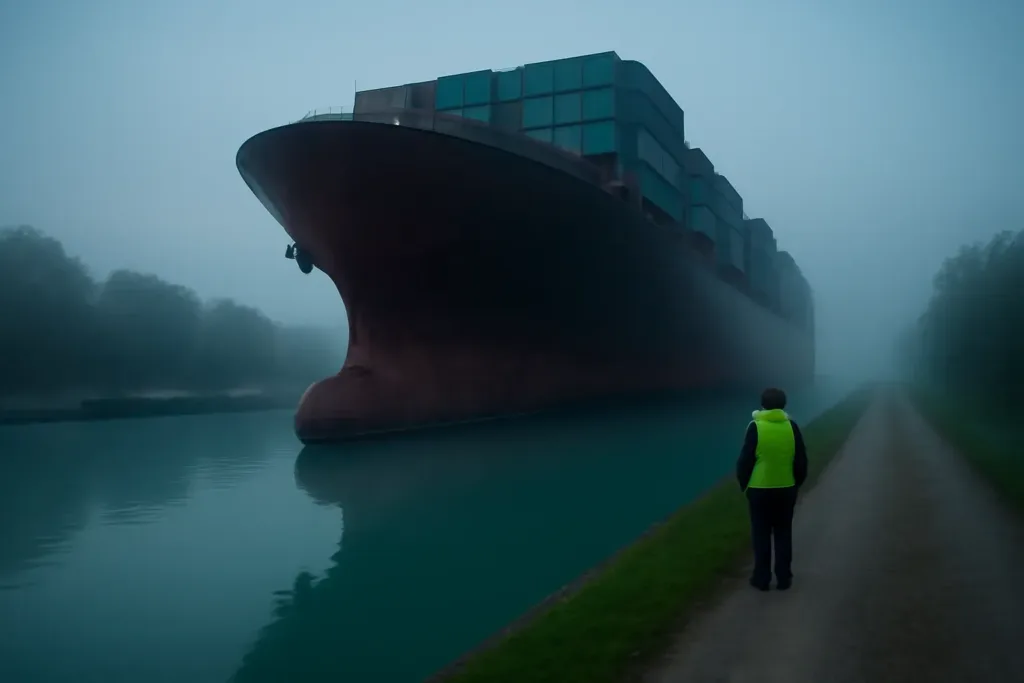
A container ship ran aground in the Tamsin Canal early on Monday and has blocked the waterway since, stopping traffic in one of the busiest shipping lanes linking Northmere to the Isles of Tamsin. The Marit Calder, 330 metres long, lodged across the narrowest stretch near the Harrow bend at about 4 a.m., according to the canal authority.
By Wednesday morning, 96 ships were waiting at either end. The canal normally passes 48 vessels a day, so two days of closure has produced a queue equal to a full two days of traffic. This article explains how that translates into higher costs for shippers, and what to watch in the coming week.
The canal authority said a gust of wind hit the ship’s stacked containers as it entered the bend, pushing the bow into the eastern bank while the stern swung the other way. Investigators have not yet established whether the crew or the pilot could have done more. The vessel carries 14,200 containers and was bound for Port Alder.
No one was injured and no cargo is reported leaking, said Beatrix Lund of the Veldt Pilots’ Association, whose members have helped at the scene. She said the pilot on board was experienced.
“The bend is unforgiving in a crosswind, and the ship is simply very large for it,” Lund said. “Nobody should rush to blame an individual before the data recorder has been read.”
Freight rates reflect the supply of ship space against the demand for it. When a canal closes, ships are not destroyed, but they are stuck, and every day a ship sits in a queue is a day it cannot carry another load. That reduces the effective supply of space on the routes that remain open.
The effect showed quickly. The spot rate for a standard 40-foot container from the Isles of Tamsin to Port Alder rose from M 1,850 on Friday to M 2,590 on Wednesday, an increase of 40 percent, according to a rate index published by the Northmere Shippers’ Council.
Nadia Orsolo, an economist at Karsholm University, said spot rates tend to overshoot in the first days of a blockage and settle once shippers know how long it will last.
“Rates are pricing in fear as much as scarcity,” Orsolo said. “If the ship is out by the weekend, I would expect most of the rise to fade within a fortnight. If it is not, the cost will stay.”
Ships can bypass the canal by sailing around the north of the Isles of Tamsin, but the detour adds nine days to the voyage. Several carriers said they would divert only ships already at sea and not yet in the queue. Others are waiting, calculating that nine days is longer than the likely closure.
Cargo owners are feeling it unevenly. Halcyon Foods said it expected to absorb the cost for now and had enough stock in its warehouses for about three weeks. Smaller importers, who ship by the container and cannot wait, are paying the higher rate immediately, said Rosalind Tey, a retail analyst.
The Northmere Grain Cooperative, which ships bulk grain rather than containers, said the canal closure would not affect its sailings this week, since its main route runs through the Strait of Maren.
The Tamsin Canal opened in 1931 and was widened in 1974 and again in 2003. The largest container ships now carry more than twice the cargo of the vessels it was first designed for. Transport officials have debated a further widening of the Harrow bend for a decade. A study by the canal authority in 2021 estimated the cost at M 310 million, and the proposal has never been funded.
Salvage crews arrived on Tuesday with six tugs and two dredgers. Two attempts to refloat the ship at high tide have failed. A third attempt is planned for Thursday night, when the tide is highest, and the salvage master said crews would first remove about 900 containers by crane to lighten the ship.
If that works, the canal authority said it would take about four days to clear the queue. If not, the next high tide that offers a similar chance falls in nine days, which is the same time as the detour. Transport Minister Ilse Vandermoor said she had asked the canal authority for a full report and would review the funding for the bend.



Comments
Write a comment